Best Funeral Services USA
Best Cremation services
As recently as the 1980s, cremation was not widely practiced in the United States. However, it has become an increasingly popular option in the past two decades. Trend forecasters expect cremation to overtake burials by 2025 and become an even more significant percentage in the coming years. One of the reasons for its rapid growth may be that through technology we have become a highly mobile population and no longer live our lives in one place. Instead, we often find families scattered across the country and even the world. Cremation has become the most efficient way to accommodate this paradigm shift when it comes to storing and transporting our remains.

History of cremation
As a death ritual, cremation has been a human option for thousands of years. Throughout history, its practice has largely depended on the culture and religion that dictates much of the funeral practice. The Egyptians famously forbade cremation, while Hinduism and Jainism encouraged it. The ancient Romans often buried their dead while reserving cremation for respected members of their society. For many years, Christianity prohibited its followers from cremating their dead, ending the centuries-old restriction until the mid-20th century.
The rise of modern Western burial practices really began in the late 19th century when Londoners became concerned that the number of dead and the space needed to bury them were reaching capacity within their growing city limits. . To control the spread of disease and leave more land for the living, these innovative Victorians began to look to cremation as a space-saving solution.
Benefits of Cremation
In addition to reducing our physical footprint after death, cremation is often a more affordable option than traditional burial because it does not require embalming, purchasing a casket, or purchasing a cemetery plot and headstone. As long as these options remain, those who want to reduce the cost of a traditional funeral service or invest in other aspects of the service can opt out if they do.
The cremation process also allows for a more unique distribution of remains, as they can be dispersed among families living in distant locations. Some people want their cremation to be scattered among places important to the individual or left to mourn at places important to the relationship of loved ones. It can itself take the form of a private ceremony that supports the grieving process apart from, or independent of, the mass funeral service.
Additionally, cremation prior to a ceremony or funeral service relieves the pressure of timeliness. Any type of memorial gathering can be held at a time that suits the needs of family and friends to ensure that everyone can gather to pay their last respects. Grieving in community allows us to find strength and support in times when we need it most.
The rise in popularity of cremation has also led to the incorporation of a crematorium at the funeral home. This means no additional transportation costs or timelines are required, which adds to its simplicity.
Options with cremation
It is not a common mistake to think that cremation is a substitute for funeral services. It just isn’t. These days, many funeral packages are similar to traditional funeral packages, although customization is easier when choosing any route.
A funeral is essentially an alternative to cremation, or cremation. However, this is also becoming increasingly misinformation as more and more people choose to have their loved ones cremated in a traditional above or below ground resting place to create a meaningful space for the deceased. If a family wishes to be buried together and one member chooses to be cremated after death, the cremated remains may be traditionally buried in an urn or other decorative and meaningful vessel.
Many people who choose to have a funeral choose to hold viewings, services, and celebrations of life knowing that most people share the need to create a celebration for the passing of a loved one. The cremation may take place before or after these additional death rites or rituals take place. For some, it is very important to have a public or private viewing of the deceased to allow friends and family members to truly begin the grieving process.
Best Funeral Service Locations
At Best Funeral Services, we provide compassionate funeral services at affordable prices to those living in Phoenix, Peoria and surrounding areas. We offer cremation and cremation services at each of our Arizona locations and will handle all the details for you. Please call us today to discuss your funeral service needs.
Best burial Services
With the passing of a loved one, family members are often responsible for planning a funeral or memorial service in the midst of deep grief. While planning an event can feel overwhelming and confusing, know that resources are readily available to help you through this difficult time. In time, you will look back on the moment when the grieving process really began. Our English word, “funnel,” comes from the Greek word, a derivative meaning ‘to take care of someone.’ In our society today, it can refer to the final care of the deceased as well as the care of the bereaved. . Mourning the loss of a loved one. Today, we offer service options in a variety of formats, including reflection or celebration of life in addition to more traditional methods. Each service can be held in our chapel, at the cemetery or onsite at your chosen place of worship. If you have a religious affiliation with a particular priest, they are also invited to perform the ceremony on our grounds. Many traditions involve visiting or seeing the deceased. This can be helpful in providing some closure for loved ones. If a public viewing feels too intrusive for you, it can be limited to family only. Whatever form a cremation takes, our goal is to provide a meaningful experience for friends and family to find strength in each other and peace through remembrance.
Advance burial planning
Many boomers with experience planning a parent’s funeral have already started planning their own. Although communicating with a spouse or child can be difficult, there is often a sense of relief that comes from dealing with someone’s last memory in advance. It also allows loved ones to enter the planning process with a sense of certainty about the deceased’s wishes. Perhaps a favorite song will be played or a poem read. Planning ahead can be a positive way to personalize a funeral with a personal touch that will help create a fond memory to return to during the grieving process.
Working with a funeral director
When planning a funeral, a compassionate funeral director can be a source of guidance and support. Having handled this task along with countless others, our funeral directors can offer options and clear choices as you choose arrangements for your loved one. A person who chooses this profession understands his unique and intimate position while going through this difficult process. They are there to support you every step of the way to ensure that dealing with the loss of a loved one is done with as little extra hassle as possible. A funeral director will also help navigate the often confusing area of funeral expenses by offering options from the essentials to the detailed. If cost is a major concern, always let your funeral director know in advance so they can take care to help you stay within a reasonable budget. Most importantly, the funeral director will ensure that the unseen details and hidden mechanics of the funeral process are in place at every turn.
Burial vs. Cremation Services
It is possible and even encouraged to hold a funeral service whether you are choosing cremation or cremation. Today, both are practiced regularly, although cremations are expected to outnumber burials by 2025. The rise in popularity of cremation in today’s world has not diminished the interest in holding a funeral, whether traditional or special.
Why is funeral important?
The purpose of these events is to celebrate and commemorate life. They can range from traditional to unique in expression, designed to best reflect the person being commemorated. They also serve as an important touchstone for those grieving a loss. A service can be the first step in creating a path to healing by bringing friends and family together to share thoughts, reflections, memories and expressions of love. Although customs and traditions vary widely between cultures, most people share the need to celebrate the death of a loved one. It is one of the oldest practices of our species, even predating Homo sapiens with evidence dating back 300,000 years.
As we are social creatures, the ritual provided by a funeral service is very important. Often, religious or cultural affiliation dictates choices regarding a loved one’s final arrangements. However, each funeral can be tailored to best reflect each family’s individual grieving process, taking into account the wishes and preferences of the deceased. At Best Funeral Services, we are able to offer a range of custom options to keep this important ritual true, yet find multiple ways to embed meaning throughout the event. Contact us for more information.
The best funeral homes in America
When faced with the decision of choosing a funeral home in your community, place your trust and confidence in a funeral home selected by America’s Best Funeral Homes. ABFH is comprised of hundreds of family-owned and operated funeral homes across the United States that are leaders in the funeral profession. They have earned the distinction of being one of “America’s Best” because they are a professional resource for the entire community offering a wide selection of quality affordable funeral and burial options. The owners and staff of ABFH’s chosen funeral homes understand that when losing a loved one, the most important thing is guidance and understanding. They are committed to respecting the dignity of those entrusted to their care and to the wishes of every family they serve. Visit the ABFH Funeral Home Locator now, because when you choose a funeral home to care for your loved one, only the best will do!
10 Most Beautiful Cemeteries, Funeral Homes and Cemeteries
Here are my ten favorite cemeteries, funeral homes and cemeteries around the world. Not only are they beautiful, but from urban legends to famous monuments – each of them has a unique story to tell.
Highgate Cemetery – London, United Kingdom
What do the parents of the famous Karl Marx, George Eliot and Charles Dickens have in common? All of them are buried in one of the most beautiful cemeteries I have ever come across called Highgate Cemetery in London. Known as one of the largest Victorian cemeteries in London, this place tops our list for its beautiful, unique gardens, trees, shrubs and flowers. The most interesting part about this cemetery? Around the 1970s, a vampire was rumored to be haunting her…
A city of the dead that haunts the living.
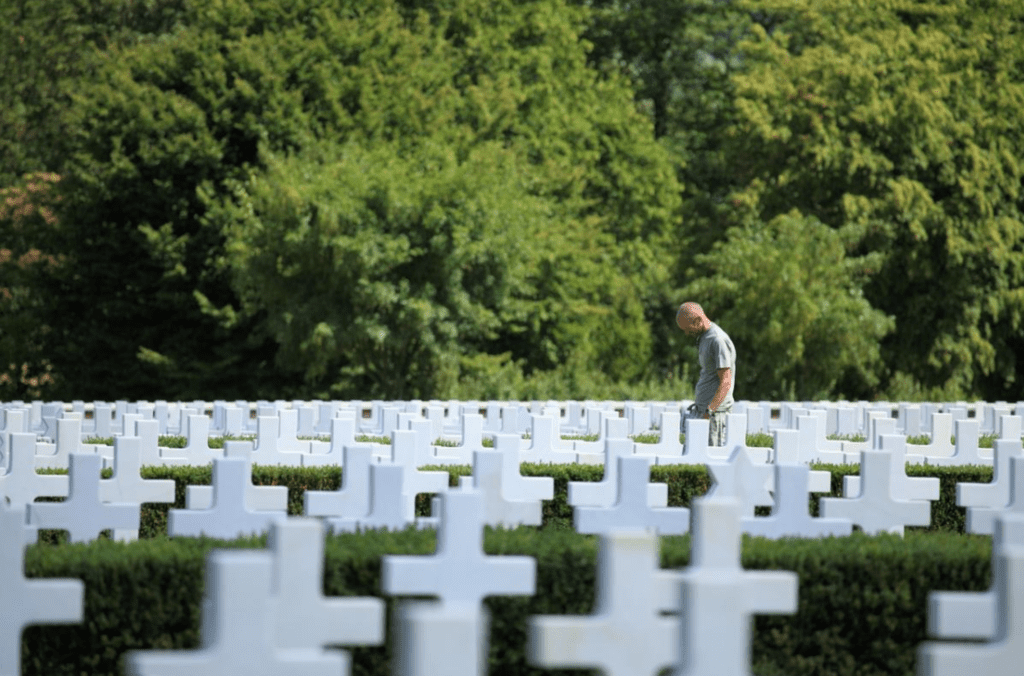
Highgate Cemetery is the final resting place for around 170,000 Londoners, including the famous, the infamous and the ordinary. Since the start of the pandemic, its leafy streets have taken on new meaning for some in the city.
LONDON—Vines crawl over headstones and tip them over. Roots leave graves behind as if reclaiming them for the earth. A message on a fallen cross: “Peace, perfect peace.”
It is the final resting place of around 170,000 Londoners, including George Eliot, Karl Marx and Henry Moore.
Perched on a steep hill overlooking the capital city, Highgate Cemetery, a Victorian cemetery still in use today, is a jumble of monuments partially surrounded by a forest that has spread around it.
To stroll its winding paths is to experience a catalog of Victorian lives, big and small, scoundrels and upstanding citizens, as well as the Victorian way of death. Many in 19th-century Britain’s growing middle class spent their entire working lives preparing for a lavish funeral and burial to prove their eligibility for entry to heaven—often to their survivors. So they used to leave little or nothing.
While that world is long gone, for many today, Highgate remains a welcome refuge from the sprawling city below, especially in the age of Covid.
“It’s a quiet town of men, as opposed to a town of underdogs,” said Ian Dingwell, chief executive of the Friends of Highgate Cemetery Trust, a group that saved the site from further destruction in the 1980s and now. was . manages it.
During Britain’s first lockdown, when people were only allowed to leave their homes for essentials and exercise, the cemetery saw a surge in visitors as Londoners sought to escape and avoid the virus. Searched for secluded places outside.
The site also took on a new resonance, Dr. Dingwell said, because many people’s lives have been touched by illness and death during the pandemic. Around 160,000 deaths have been recorded in the UK since it began in early 2020.
“An extraordinary number of people have died during the pandemic in this country and obviously around the world,” he said. “I think very few people have managed to get through the pandemic and not think about their own death.”
On a bright early February morning, daffodils were beginning to poke through the soil between the rows of tombstones, and a faint light peeked through the trees that had sprouted here from decades of neglect. The Gothic beauty of the overgrown cemetery is apparently far from what its designers intended.
Established in 1839 on a site overlooking the city, Highgate Cemetery was one of Victorian London’s “Magnificent Seven” commercial cemeteries, the first to be built on the outskirts of the city to ease the burden on cemeteries. was
But the once-carefully developed route fell into disrepair shortly after World War II, when its owners went bankrupt. As maintenance was neglected, weeds, vines and self-seeding trees took over. And the incidents of vandalism became more frequent.
In the 1980s, a group known as the Friends of Highgate Trust saved the site. The group maintains the site and welcomes visitors for a small fee, and tries to ensure access to families of those buried there.
The west side of the cemetery was opened first and contains the most elaborate tombs, designed to protect their occupants in the afterlife, while the east side has more contemporary tombs.
The center on the west side is the “Egyptian Avenue” with a row of vaults with iron doors that mimic the tombs of the pharaohs. The mortar now falls from under the brick.
Among them are the resting places of Radcliffe Hall, a famous poet and novelist best known for “The Vale of Loneliness,” a semi-autobiographical book about a same-sex love story, and his partner, Mabel Veronica Beaton, a The famous singer—all at a time when laws criminalizing homosexuality were often brutally enforced.
Many of the tombstones now provide clues to the lives of those who lie there: a sleeping lion atop the grave of a famous Victorian traveling master, a mourning dog at the foot of his master’s headstone.
E Kremlin, who was buried at Highgate after being poisoned in a London hotel in 2006 (most likely on the orders of Russian President Vladimir V. Putin, a 2016 British inquiry report said). A cut-off column symbolizes a lack of life.
A few steps away, the headstone of a young woman — Emma Wallace Gray — details the 19-year-old’s gruesome death, detailing how her clothing caught fire and she was badly burned. . She died 10 days later on 20 October 1845.
“In the bloom of youth when others clung to life with passion, I prayed amid agonies for death,” reads his epitaph.
At the foot of her grave, snowdrops rose from the soil, their white flowers bowed as if bowed in mourning.
The poignant writings and stories of these lost lives have proved to be an attraction for those seeking time for themselves.
Licia Proserpio, 37, an Italian academic with bright blue hair and a streak of love for history, made her way along the narrow path between the graves and stopped for a moment at one spot. She said her visit has given her some time for self-reflection.
“You can go around with your thoughts,” he said.
Mandy Wootton and Lynn Cook, who visited Highgate on the same day, said the cemetery prompted discussions about end-of-life decisions – whether to be buried or cremated, and how to remember them. Want. But it was also a life-affirming experience, he said.
“That’s what it’s all about – live in the moment, carpe diem, the old adage,” Ms Cook said.
Perhaps the most famous person buried at Highgate is Marcus, whose impressive mausoleum on the east side of the cemetery contains a large bronze statue that is not universally admired. Set among a sprinkling of graves of other well-known socialist figures, it attracts visitors from all over the world. It has also been the scene of several acts of vandalism in recent years.
Alex Kairos, 32, and his partner, Irene Papa, 30, both Greek and living in London, were recently particularly interested in visiting Marx’s tomb.
“We’re more or less politically aligned – we’re left-wing,” Mr Kairos said. “But, many poets and literary figures are buried here.”
The eastern cemetery is also filled with many new graves, their headstones protruding from the hillside like crooked teeth. And the briefs are more personal: Gone are the Victorian manners of piety that dominate the old part of the cemetery. In their place are fragments of life.
For Patrick Caulfield, the famous British painter often associated with Pop Art who died in 2005, the message he left behind was a straightforward one. His granite step design headstone bore a simple word written in bold letters: “D E A D.”
Nearby is the grave of Jeremy Beadle, who died in 2008. Ask my friends,” his headstone reads.
And across a path “Gordon Belle (middle name Ernest, though he didn’t give it any importance).”
Perplexed by a map of the cemetery’s winding trails, two friends, Kristen Brooks-Doucet, 33, and Claudia Kowalczyk, 32, who had set aside the day to explore the outdoors together, said they were left wondering how to live. It was fun to learn.
“I think it tells amazing stories,” Ms. Brooks-Doucet said. “I don’t think we tell enough stories these days.”
She said she had visited Highgate before, and was comfortable with the idea of death. It helps that her mother is a funeral director in her native Australia.
“I am not afraid of death. Are you afraid of death?” She turned to ask her friend.
“Absolutely,” Ms. Kowalczyk said without fail.
“I’m not,” Ms. Brooks-Doucet replied. “I think it will be fine.”
It’s a whole field of graves—it’s a whole field of loss—and you can’t think about where you fit in and know it’s going to happen to you, and life goes on,” Dr. said Dingwell.
At the grave of Alexander V. Litvinenko, a former K.G.B. The officer became the enemy.
Horan & McConte Funeral Home – Denver, Colorado
The real reason I love Horan & McConaty Funeral Home so much is their attention to detail. One of Horan and McConti’s most beautiful assets is the Cremation Gardens at Rocky Mountain Memorial Park, complete with a pond, fountains, waterfalls and even walking paths. These peaceful crematoriums are the perfect place for families to think and grieve during difficult times. If you ever want to see the gardens for yourself, Horan & McConaty offers free tours daily.
Horan & McConaty Funeral Service on S. Colorado Blvd is located midway between Virginia Village and Glendale, local communities they have served for many years. The funeral home is within a 30 mile radius of two cemeteries.
His funeral home has a large chapel with its attractive pale yellow brickwork that can accommodate 200 guests. Elegant seating areas in the foyer, spacious views and reception rooms provide a peaceful atmosphere for families before the funeral service begins. Both direct cremation and cremation are offered, along with formal burial and cremation.
Horan & McConaty owns and operates seven funeral homes. The business was founded in 1890 by the great-grandfather of its current CEO and President, John Horan, and is supported by a large number of dedicated staff, including Vice President Valerie Horan, Chief Operating Officer Darren B. Forbes. . and Vice President Jennifer McBride. In 1890, the first funeral home was located at the northwest corner of 15th and Platte Streets serving the lower downtown area of Denver.
The overall funeral service includes arranging catered funeral receptions and burials for distinguished veterans and providing funeral goods such as Legacy Touch Keepsakes.
Pierre Lachise Cemetery – Paris, France
Père-Lachaise Cemetery, formally Cimetiere de l’Est (“Cemetery of the East”), is a cemetery and park on the northeast side of Paris, France. Located on approximately 110 acres (44.5 hectares), among more than 5,000 trees, it is both the largest park and the largest cemetery in Paris. Estimates of the number of people buried there vary, from about 300,000 to about 1,000,000. Père-Lachaise is a major tourist attraction, famous for the tombs of notable figures, and is often called the most visited cemetery in the world. It has always been non-sectarian. Famous people buried there include Peter Abelard and Hallows, Moliere, Eugène Delacroix, Jacques-Louis David, Georges Bizet, Frederic Chopin, Honore de Balzac, Marcel Proust, Georges Severt, Oscar Wilde, Sarah Bernhardt, Isadora Donne, Sterwin, Stander. Included. Collette, Edith Piaf, Marcel Marceau, Richard Wright, Yves Montand, and Jim Morrison. The remains of Abelard and Héloïse (who died in 1142 and 1164 respectively) are reportedly the oldest identified bones in the cemetery.
The cemetery grounds are located on a hill once known as the Champ Evêque, where a wealthy merchant lived in the 15th century. In the 17th century, the Jesuits took over his house and turned it into a Jesuit retreat. King Louis XIV’s confessor, Father François de la Chasse de Aux (commonly known as Le Pere la Chasse) resided there, and the cemetery derives its name from him. The Jesuits renamed the mountain Mont Louis in honor of the king, who reportedly visited the area during times of unrest, such as during the Fronde. The king’s bodyguard also resided there, and the area became famous for its lavish parties, attended by those eager to support both the king and his confessors. After Père Lachaise’s death in 1709, the estate was greatly enlarged. The Jesuits were evicted from the property in the mid-1760s during the order’s general expulsion from France.
By the end of the 18th century, burial space in Paris was overcrowded, and city officials became concerned about the possibility of disease spreading from overcrowded cemeteries. As a result, the area was established as a municipal cemetery in 1804. The site was designed by the architect Alexandre Theodor Brongniart and further developed by the urban planner Nicolas Frochot. Initially, due to its location on the outskirts of the city (it was incorporated into the Ville de Paris in 1860), Père-Lachaise was used for burials from older cemeteries. To promote the cemetery and encourage its use, Frochout and city officials, with great fanfare, moved the remains of famous people from other cemeteries to Père-Lachaise. Balzac’s reference to the cemetery in some of his fictional works also helped popularize the new facility. Long ago, being buried at Père-Lachaise became a matter of status, as the number of exposed graves attests. A crematorium was added in the late 19th century.
The cemetery was twice the scene of armed conflict: once in 1814, during the Napoleonic Wars, when it was overrun by the Russians at the Battle of Paris, and again in May 1871, during the Paris Commune riots, when 147 Communards was slaughtered there. The cemetery’s Mur des Fédérés (“Communards’ Wall”), with bullet holes still traceable, marks the site of the massacre. Père-Lachaise has several memorials dedicated to the war dead and victims of the Holocaust.
The cemetery’s hilly terrain and tree-lined avenues are crowded, peaceful, and charming at the same time. Sculptures abound, and tombs range from simple, flat, horizontal headstones to elaborate small chapels open to the public. Some tombs are perfectly maintained, others are dilapidated and abandoned. Maps showing the locations of the most popular graves are widely available.
One of the most frequently visited graves is that of rock star Jim Morrison (lead singer of the Doors), who died in Paris in 1971 at the age of 27. In addition to flowers, fans have left lit candles, wine and bottles of wine. , and even drug paraphernalia on his headstone. Vandals, fans, and monument hunters have taken over the site of monuments and statues, held parties at his grave site, and even tried to remove his body. Nearby tombs were often damaged. The presence of Jim Morrison’s grave site at Père-Lachaise was no small irony in light of the cemetery’s celebrity-seeking founders.
Borders Pet Cemetery
Rolling hills, beautiful green grass… what’s not to love about this amazing crematorium grass? Called “Britain’s most beautiful crematorium”, we are recognizing Borders Crematorium not only for its beauty, but also the detail that went into its creation. The creator, Adrian Burton, spent nearly 20 years searching for the perfect location for his crematorium, finally settling on a quiet spot near Edinburgh, Scotland. Since its opening in December 2011, Borders serves approximately 600 families each year.
BORDERS PET CREMATORIUM is ideally located in Melrose in the central Borders, within an hour’s drive of most border towns.
Borders Pet Crematorium is a family run business that started in 2018 but has been in the planning stages for several years.
The business is run by Mark Riddle who has over 30 years of business experience. Mark has always been an animal lover and grew up with many pets of all kinds.
Lone Fir Cemetery – Portland, Oregon
The reason we love Lone Fare Cemetery so much is because of its unique twist on memorializing your loved ones. Family and friends laying their loved ones to rest at Lone Fair have the opportunity to plant trees or flowers in their honor, creating a large community garden at the cemetery. With over 25,000 burials spread over an area of over 30 acres, we can only imagine the beauty that unfolds here every day.
Lone Fir Cemetery
Located in Southeast Portland, Lone Fare Cemetery is more than just a cemetery. It is one of Oregon’s most treasured historic sites and is also Portland’s second largest arboretum.
The story of the Lone Fir
Lone Fur’s first occupant was Emory Stephens. He was buried in 1846 in a rural setting that was then privately owned. The land was later platted in 1855 as Mount Crawford Cemetery. At that time Portland existed only on the west bank of the river. Because of the swampy ground, the city closed cemeteries at Ankeny and Front, Washington and Stark at 10th, and Burnside at 11th. Several bodies were then reburied at Mount Crawford.
Mount Crawford was renamed Lone Fir in 1866, for the once lone tree at its northwest corner. (It still stands.) Lone Fir is one of Portland’s oldest continuously used cemeteries and is now a de facto arboretum, with more than 700 trees representing 67 species. Twenty-five thousand people are buried here.
Chestnut Grove Memorial Gardens opened in Lone Fair in 2013 to provide an option to the growing number of people who choose cremation.
Hodges Funeral Home – North Naples, Florida
A place on this list not only for the beauty of their funeral home, but for the innovative ways they are adapting their facilities to better serve today’s families. They recently decided to open a full-service wine cellar in their funeral home, which to me represents a true celebration of life. What’s not to love about it?
Hodges Funeral Chapel and Cremation Service in Naples
About Hodges Funeral Chapel and Cremation Service

The caring memorial directors at Hodges Funeral Chapel & Cremation Service provide specialized funeral solutions tailored to meet the needs of every family. Trust is their primary concern and they specialize in traditional funerals, primary burials, bereavement assistance, urn selection, and military memorial services including offering experienced burial flags. Professional, dedicated staff can help you make funeral plans, make funeral arrangements, and talk you through burial options. A funeral director can guide you through all aspects of the service. These include funeral service flowers, casket selection, appropriate music selection, and local accommodations.
Services offered by Hodges Funeral Chapel and Cremation Service
If you are thinking of sending funeral flowers to a family who may have had a loved one here}, you can send funeral flowers to Hodges Funeral Chapel & Cremation Service today. Florists near Hodges Funeral Chapel & Cremation Service experience a wonderful and diverse selection of flowers, bouquets and baskets to help show your sympathy to the family. Contact them today using the information above.
Whoever is interested in planning your funeral, you can be sure that your legacy will be protected and you will have peace of mind. This location has proudly served the neighborhood with exceptional care for years and guides your family through memorial services, your tribute, funeral expenses, cemeteries directions, guest book, online Creation of death, and can help tell the story of your life.
Located in Naples, Florida and 2.5 miles from the town center of Naples, this business is in Collier County and will serve the surrounding areas of: Cocoa River, Golden Gate, Naples, Vanderbilt, Bonita Beach, Barefoot Beach, Barefoot Beach, Bonita Springs, Ft Myers Beach, Ft Myers Beach, Miromar Lakes, S Fort Myers, San Carlos Park, West Covina, Ave Maria, Cape Coral South, Cape Coral S, Lehigh, Ft Myers, and St James City.
Punta Arenas Cemetery – Punta Arenas, Chile
Punta Arenas Cemetery isn’t just on this list because of its unique, raw beauty. It makes the list because it is one of the rarest cemeteries in the world. In 1919, a wealthy pioneer named Sarah Brown donated the cemetery in exchange for one request: that once she passed through after her death, the main entrance would be closed forever. The door is still closed today. Even stranger, urban legend has it that Sarah Brown’s embalmed corpse is exhumed from her tomb every November to have her hair combed and fresh makeup applied!
One of the attractions of the cemetery is the Tomb of the Indio Deconocido (or Unknown Indian). The Indian’s body was found on an island in 1929, and he was buried in the Punta Arenas Cemetery. By the second half of the century, rumors of his supernatural powers abounded. A bronze statue was erected in his honor in 1969 along with 3 walls around his mausoleum. The walls are now completely covered with plaques thanking them for “their favors”. Scary!
With its mausoleums and its lawns, the Punta Arenas Cemetery is one of the most visited sites by those who want to learn about the city’s history.
It is said that to truly know a city, visitors must visit the surroundings of its main square, enter its churches and temples, and visit its cemeteries. The Punta Arenas Cemetery is located at the entrance of the city and, apart from a unique architectural value, it holds the remains of pioneers and important families that gave birth to the entire population of the area.
Integrating with urban heritage, this cemetery was founded in 1894 and replaced the previous cemetery, which was located where José de los Santos Mardones Square stands today.
On a piece of land donated by the government, the engineer Fortunato Circuitti built the magnificent portico and mural walls donated by Donna Sarah Brown in 1919. That is why it is named after him.
According to settlers, when the city’s benefactor donated the portico, she expressed her desire to be the only one to cross such an entrance, which would later be sealed. Whether true or not, when she died, Sarah Brown’s remains entered the cemetery through the main entrance that leads to the chapel, the main body of the portico. The gate has not been used since then and the effects of time have made it useless due to the rusting of the iron works. Perhaps this was the last wish granted to the great Mrs. Brown by her southern lands.
Silence in the park
The facade was decorated by the artist Pasquale Borch, who created the crown and other decorative details.
Its enviably maintained park invites visitors to meditate. European cypress trees line the avenues giving the area an English touch, with open quiet spaces. The shrine is decorated with various styles and marble and brass finials and forged iron sculptures in the inner corridors.
The most magnificent chapels date from the first three decades of the 20th century and belong to the aristocratic families of the region. May the remains of the Menendez-Behties, Brown Hamburgers, Blanchards, Kosanovacs, Menendez-Montes and Sarah Brown rest in peace.
Various institutions have also erected their own buildings, such as mutual societies, foreign colonies and the Salesian Order, whose chapel was designed by Father Juan Barnaby in 1902.
Frank E. Campbell – Funeral Chapel
Founded in 1898, the legendary Frank E. Campbell Funeral Chapel is known for “a long history of protecting the privacy of the rich and famous and their loved ones.” Some of her notable funerals include Luther Vandross, Aaliyah, Jim Henson, The Notorious B.I.G. And Heath Ledger.
In 1926, nearly 100,000 mourners (pictured above) gathered for silent screen actor Rudolph Valentino at the funeral home, and he has been known for drawing large crowds ever since. We love this funeral home because its beauty is hidden… it’s one of the only places in existence that truly protects the privacy of those who have not had much in their lives.
Community Life Center – Indianapolis, Indiana
At first glance, you might not think this is a funeral home. And if you thought so, you were right. Washington Park East Cemetery decided in 2001 to upgrade its funeral home and turn it into a multi-purpose facility, and the results have been spectacular. Their newly renovated community facility, the Community Life Center, is now open for weddings, birthday parties, reunions and even proms! We put this funeral home at the top of our list for its utility in the community and its beauty.
Funeral homes extend to hosting weddings, other events.
INDIANAPOLIS — Denisa Molander entered the courtyard wearing a white dress and matching veil. Her groom waited at the other end in front of ornate gates and lattice work that blocked the view of the nearby cemetery with its 73,000 graves.
Molander’s June wedding was one of more than 50 that will be held this year at the $10 million event center operated by the Washington Park East Cemetery Association in Indianapolis. The somewhat ironically named Community Life Center sits on cemetery land near a funeral home and has hosted proms, community banquets and even breakfasts with Santa.
“It’s such a beautiful building,” Molander said. “That’s what really drew us to it.”
Funeral homes are no longer just for funerals. Businesses that previously focused almost entirely on honoring the dead are now open to an array of events as they seek to increase revenue.
Cemetery and funeral home operators say they are being squeezed as more people favor simpler, less expensive funeral services. Their business is also being pressured by the growing popularity of cremations, which can generate less than half the revenue of traditional casket burials.
According to the Cremation Association of North America, cremation will become the most common form of cremation nationally within a few years.
Funeral home operators also say there is a need in their communities for venues that can host weddings or other large events, and people are no longer stuck with their core businesses.
Declining membership in churches and civic organizations is also driving demand for non-traditional venues for weddings and receptions.
As a result, funeral homes and cemeteries across the country are marketing their properties for an array of uses. About 10 percent of 280 respondents to a National Funeral Directors Association survey last year said they had built a community center to host other events. This is 6% more than in 2011.
As a business, we need to find ways to continue to grow,” said Bruce Buchanan, Indianapolis Cemetery Association board member and funeral home business owner.
Mike Nicodemus, vice president of the National Funeral Directors Association, said younger generations are growing up without the same stigma around death that their parents and grandparents had.
“People are not as religious as they used to be … and their attitudes about death are changing,” he said. “Funeral homes were invented for one reason: for funerals. Now they’re used for all kinds of things.”
Stephen Prothero, a professor of religion at Boston University, said the versatility could be appealing to couples who need a place to host their big day but are not religiously affiliated.
The theory comes with a caveat, he said: The site must have some separation between wedding and funeral business, because of a cultural taboo against too closely conflating death with weddings, which often mark births and the beginnings of families.
Chelsea Lesnick chose the suburban Cleveland funeral home her grandparents opened in 1949 as her wedding venue last March.
The home’s second-floor reception center — not the funeral space below — hosted the service and party afterward for about 50 people. Lesnick, 24, said the site didn’t feel like a “house of death or a place of mourning.”
“It felt like a place of love and just a bright joy that day, it really did,” she said.
Despite their increased openness to hosting different events, funeral directors and cemetery executives say they haven’t changed their core business.
Matt Lynn built a multi-use facility in 2008 after flooding damaged his funeral home. His Cedar Rapids, Iowa, business now operates three wedding venues and two venues that can host weddings and funerals. It also maintains a golf course and runs a farmers market. Non-funeral events still account for about 20 percent of Lynn’s business’s total revenue.
But versatility helps in his main line of work. Even when people are looking to hold services for a deceased loved one, they are increasingly opting for slideshows, food and alcohol-filled celebrations of life that span a few days rather than a traditional viewing and service. has happened
“I don’t think I’ve coordinated a (traditional) funeral in a long time because those things are depressing,” he said.
Washington Park Cemetery in Indianapolis accounts for only 5 percent of the association’s total revenue.
The center’s wedding business didn’t really take off until four or five years ago. Now, it’s booked almost every weekend for weddings this summer and is taking reservations for 2016.
“The words I love to hear, and I hear them all the time, are, ‘I didn’t know you could do that,'” said Buchanan, a cemetery association board member.
The peak rental rate for a community life center is up to $4,000.
That’s less than half the average rate in Indiana of $9,837, according to wedding planning website TheKnot.com.
Indianpolis bride Molander said the center’s rates are comparable to other locations he considered.
The center gained her attention in part because it was easy for her guests to get to and could host both the ceremony and the reception.
After the ceremony, guests were able to take a short walk through the courtyard into the center. Once inside, they sipped drinks and mingled around a fountain in the center’s rotunda, which is lined with Italian marble, while they awaited a reception in a nearby ballroom.
“Everything turned out perfectly,” she said.
Forest Lawn Memorial Park – Glendale, California
Forest Lawn Memorial Park is not a run-of-the-mill cemetery or funeral home. In fact, it is much more than a cemetery – it is an art gallery, architectural exhibition, museum and religious retreat all in one. Dr Hubert Eaton built Forest Lawn in 1917 because he thought most existing cemeteries were “smelly, depressing stone yards”. He made it his mission to create a cemetery that reflected his optimistic beliefs and captivated its visitors. His vision turned into one of the most beautiful cemeteries in the world, where some of the most famous stars in history were laid to rest, including Clark Gable, Jimmy Stewart, Sammy Davis Jr. and even Walt Disney! While sightseeing is not necessarily encouraged in this beautiful cemetery, you can still take a chance and take in its beauty for yourself.
Sculpture, etc., at Forest Lawn Memorial Park, Glendale, California, 1951
About this item
Title
Sculpture, etc., at Forest Lawn Memorial Park, Glendale, California, 1951
Abstract
“Fairy Castle” “Mystery of Life” garden with toy towers and turrets in “Lullabyland”; Large duck pond with elaborate fountain.
Created / Published
1951.
Notes
– This record contains unverified, outdated data from the shelf list card.
– submitted for copyright by; Forest Lawn Memorial Park Assn., Inc.,; 1951.
Medium
3 postcard reproductions of color photographs.
Call Number/Physical Location
LOT 5723 (F) [P&P]
Repository
Library of Congress Prints and Photographs Division Washington, DC 20540 USA
Digital ID
https://lcweb2.loc.gov/pp/cphquery.html
Forest Lawn Cemetery
An extraordinary final resting place full of great art, amazing sculptures and dead celebrities.
FOREST LANE is one of the most eclectic cemeteries you will ever come across. Along with the high-end religious imagery you’d expect from the final resting place of so many of the rich and famous, you’ll find random collections of 13th-century sculptures, a spectacular Michelangelo exhibit, and a slightly compelling patriotic side. .
Within this beautiful 300-acre park, there is no end to the art exhibits. His collection includes complete replicas of Michelangelo sculptures, dozens of beautiful stained glass windows, including two that hold multimedia presentations, a mosaic of the signing of the Declaration of Independence, and a large bronze statue of George Washington.
Although a tour of the art at Forest Lawn can take more than a day to fully complete, the real purpose is obviously to serve as a final resting place for more than 250,000 people, including the world. Also includes more celebrities than anywhere else. Walt Disney, Jimmy Stewart, Michael Jackson, Elizabeth Taylor, Humphrey Bogart, Mary Pickford, Clark Gable, and George Burns are all immortalized here.
Another fascinating thing to do here is tomb hunting. The staff at Forest Lawn don’t exactly smile at visitors looking for the graves or crypts of their favorite stars, so it’s up to you to find them (or the website below, which has a good selection of many of these famous graves. provides directions). Some, like Jimmy Stewart and Larry Fine (Three Stooges) are easily accessible to the public. It’s just a matter of knowing where to look, and in a park this large, that can be quite a task.
Others, like Walt Disney and George Burns, aren’t completely off limits, it’s just a matter of a door opening or a chain being stepped on. Then, there’s Elizabeth Taylor and Humphrey Bogart, behind a large metal door that can only be opened with a “golden key.” (Yes, that’s what it says on the door). Not only is Michael Jackson’s tomb hidden away from public view, but its exact location is also unknown.
There is so much to do and see here, it could take you almost a full day to see the park. There is no cafe, so pack a picnic.